|
- Home
- About
-
PoLNET3
- Steering Group
- Physics of Life Roadmap
- Funding Opportunities >
- Early Career Researchers
-
Events
>
- Upcoming >
-
PoLNET3 Past Events
>
- Winter School: challenges and opportunities in Physics of Life
- Physics of Life: ECR bootcamp
- Physics of Life Summer School 2022
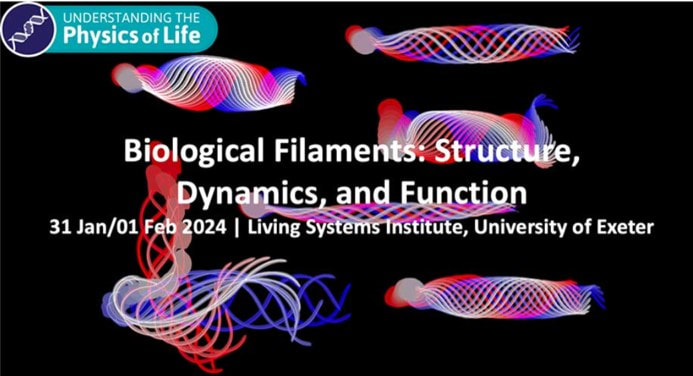
- Biofilaments Workshop 2024
- Non-equilibrium explorations on the physics of life : remembering the biological physics of Tom McLeish
- NOTICE - Novel Optical Technology in Cardiac Electrophysiology
- Physics of Life 2023
- Motility in Microbes, Molecules and Matter 2
- Tissue dynamics
- Cutting-edge methods for bacterial pathogen interactions with host cells
- Motility in Microbes, Molecules and Matter
- Periodic patterns
- Physics of Life ECR workshop
- Physics of Life/iPoLS seminar
- Biophysics and evolution
- Launch
- Physics of Medicine
-
POLNET 2
- PoLNET2 team
- Student Summer Bursaries 2019
-
Events
>
-
PoLNET2 Past Events
>
- Sandpits
- Past summer schools >
- Physics of Life Town Meetings >
-
Past Workshops
>
- QMGR V
- Non-equilibrium Cold Plasmas in Biology and Medicine
- The Fundamentals of Late Stage Cancer
- The Physics of Evolution
- Nanostructures at Soft Interfaces: Technology and Biophysics
- Physics of Biological Oscillators
- The Future of Optical Techniques in Biology
- Tom McLeish's Durham farewell symposium
- Multiscale mechanics in Biology
- Epigenetics
- Physics of Animal Health
- Interdisciplinary Challenges in Non-Equilibrium Physics
- Cancer Workshop
- QMGR
- Symmetry
- Nanofluidics
- Quantum Biology
- Antimicrobial Resistance
- Filaments and Cellular Responses
- Biocomputation
- Workshop Reports
-
PoLNET2 Past Events
>
-
PoLNET 1
- Useful Links
- Contact us
- Home
- About
-
PoLNET3
- Steering Group
- Physics of Life Roadmap
- Funding Opportunities >
- Early Career Researchers
-
Events
>
- Upcoming >
-
PoLNET3 Past Events
>
- Winter School: challenges and opportunities in Physics of Life
- Physics of Life: ECR bootcamp
- Physics of Life Summer School 2022
- Biofilaments Workshop 2024
- Non-equilibrium explorations on the physics of life : remembering the biological physics of Tom McLeish
- NOTICE - Novel Optical Technology in Cardiac Electrophysiology
- Physics of Life 2023
- Motility in Microbes, Molecules and Matter 2
- Tissue dynamics
- Cutting-edge methods for bacterial pathogen interactions with host cells
- Motility in Microbes, Molecules and Matter
- Periodic patterns
- Physics of Life ECR workshop
- Physics of Life/iPoLS seminar
- Biophysics and evolution
- Launch
- Physics of Medicine
-
POLNET 2
- PoLNET2 team
- Student Summer Bursaries 2019
-
Events
>
-
PoLNET2 Past Events
>
- Sandpits
- Past summer schools >
- Physics of Life Town Meetings >
-
Past Workshops
>
- QMGR V
- Non-equilibrium Cold Plasmas in Biology and Medicine
- The Fundamentals of Late Stage Cancer
- The Physics of Evolution
- Nanostructures at Soft Interfaces: Technology and Biophysics
- Physics of Biological Oscillators
- The Future of Optical Techniques in Biology
- Tom McLeish's Durham farewell symposium
- Multiscale mechanics in Biology
- Epigenetics
- Physics of Animal Health
- Interdisciplinary Challenges in Non-Equilibrium Physics
- Cancer Workshop
- QMGR
- Symmetry
- Nanofluidics
- Quantum Biology
- Antimicrobial Resistance
- Filaments and Cellular Responses
- Biocomputation
- Workshop Reports
-
PoLNET2 Past Events
>
-
PoLNET 1
- Useful Links
- Contact us